
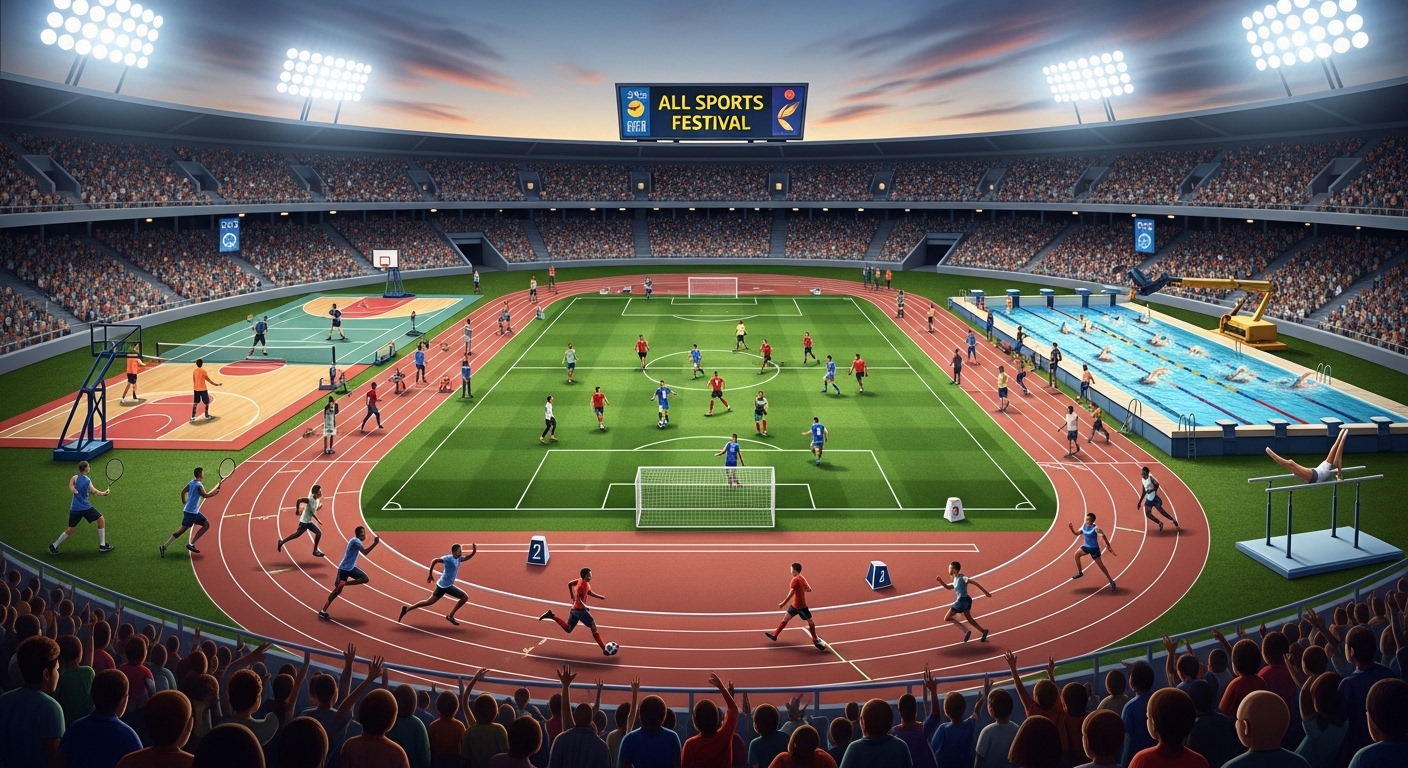
Sports have long been a fundamental part of human culture and history. They not only serve as a means of entertainment but also act as a unifying force that brings people together across boundaries of race, religion, and nationality. In this blog post, we will explore the evolution of sports, from their ancient roots to the highly organized, professional spectacles we witness today.
The Origins of Sports: Ancient Civilizations
The origins of sports can be traced back to the earliest human civilizations. Ancient Egypt, Greece, and Mesopotamia were some of the first cultures to formalize physical competitions as part of their societal framework.
Ancient Egypt and Mesopotamia:
The ancient Egyptians were among the first to incorporate physical competitions into their social and religious practices. They engaged in activities like archery, wrestling, and swimming. In Mesopotamia, competitive games were often held as part of religious festivals. These early sports were not only a means of entertainment but also had ritualistic significance, as they were believed to please the gods.
The Ancient Greeks and the Olympic Games:
Arguably the most significant development in the history of sports came from Ancient Greece with the creation of the Olympic Games. Held every four years in Olympia, these games were initially a religious festival to honor Zeus, the king of the gods. They included events such as running, wrestling, long jump, and chariot racing. The first recorded Olympic Games took place in 776 BC, marking the beginning of organized athletic competition in the Western world.
In Ancient Greece, sports were not just physical contests; they were integral to the development of the body and mind. The Greeks placed great emphasis on physical training, and athletic prowess was seen as a virtue. This was evident in their gymnasiums, which were centers for physical education, and in their philosophy, where thinkers like Plato and Aristotle discussed the importance of balance between mind and body.
The Middle Ages: Sports Take on New Forms
After the fall of the Roman Empire, the development of sports slowed down in Europe. However, physical competitions and games still existed, albeit in a less organized form. The Middle Ages saw the rise of various forms of combat sports and tournaments.
Medieval Jousting and Tournaments:
During the medieval period, knights and soldiers engaged in mock battles to train for actual combat. These tournaments were the precursors to modern-day contact sports. Jousting, in particular, became a popular sport, where two knights on horseback tried to unseat each other using lances. Tournaments often attracted large crowds and were seen as a way for knights to showcase their prowess and gain honor.
Ball Games and Early Football:
In parallel with these martial competitions, there were also ball games played in various parts of Europe. These games were loosely organized and were often played between neighboring villages or towns. The early forms of football (or soccer, depending on the region) began to emerge during this time. In these games, players would kick a ball through opposing teams’ goals, though there were no standardized rules, and the games could become quite chaotic.
The Renaissance and the Birth of Modern Sports
The Renaissance brought about a renewed interest in the physical sciences, the human body, and the arts. It was during this period that the idea of organized sports began to take shape, particularly in England, which would later become the birthplace of many modern sports.
The Emergence of Cricket and Rugby:
In England, cricket emerged as a popular sport in the 16th century. It was initially played informally, but by the 17th century, it became a more organized competition, with clubs forming and standardized rules emerging. Similarly, rugby had its origins in English public schools, where students would play games involving the carrying of a ball.
The Formation of Formalized Rules:
As society became more organized, the need for structured and codified rules in sports grew. In 1863, the Football Association was formed in England, and the rules of soccer (football) were standardized. This paved the way for the development of modern football, with national leagues and international competitions such as the FIFA World Cup later emerging.
Other sports also saw the formation of governing bodies and the establishment of formal rules during this period. Tennis, for example, became more standardized with the creation of the first Wimbledon tournament in 1877, and the first modern Olympic Games, with multiple sports and international participation, were held in Athens in 1896.
The 20th Century: The Rise of Global Sports
The 20th century marked the true globalization of sports. With the advent of mass communication, including radio, television, and eventually the internet, sports were able to reach a broader audience than ever before. This period also saw the professionalization of many sports, with athletes becoming international celebrities.
The Growth of International Competitions:
The most prominent development in the 20th century was the establishment of international sports competitions. The Olympic Games, revived in the late 19th century, became a global spectacle, with nations sending their best athletes to compete for gold, silver, and bronze. The World Cup, established in 1930, similarly united nations through the global love of football.
Professional Sports Leagues:
As the 20th century progressed, sports also became more professionalized. In North America, the National Football League (NFL), Major League Baseball (MLB), and the National Basketball Association (NBA) grew in stature. These leagues not only offered athletes the opportunity to earn substantial salaries but also revolutionized how sports were consumed, with games broadcast on television and stadiums filled to capacity.
In Europe, football became a dominant force, with clubs like Real Madrid, Barcelona, Manchester United, and Bayern Munich achieving global recognition. The rise of celebrity athletes, such as Muhammad Ali in boxing, Michael Jordan in basketball, and Pelé and Diego Maradona in football, helped elevate the profile of individual sports.
The Digital Age and the Future of Sports
The 21st century has ushered in new challenges and opportunities for the world of sports. The digital age has transformed the way sports are consumed, with streaming services and social media platforms providing fans with real-time access to games, highlights, and behind-the-scenes content.
Sports in the Digital Era:
Digital platforms have made sports more accessible to fans around the world. Whether it’s watching a live match from the comfort of your home or engaging in interactive social media discussions, the fan experience has been fundamentally altered. The development of esports is another major trend, as competitive video gaming has evolved into a billion-dollar industry, attracting millions of viewers worldwide.
Sports and Technology:
Technology has also played a significant role in enhancing both the athlete’s performance and the fan’s experience. Innovations such as wearable devices, advanced analytics, and virtual reality are beginning to revolutionize how athletes train and compete. Fans now have access to real-time statistics, augmented reality experiences, and virtual seats in stadiums halfway around the world.
Sustainability and Inclusion:
Looking ahead, the sports industry is becoming increasingly focused on issues like sustainability, diversity, and inclusion. With global concerns about climate change, many sports organizations are taking steps to reduce their environmental footprint. Simultaneously, there is a growing push to ensure that sports are inclusive, accessible, and representative of all communities, regardless of gender, race, or ability.
Conclusion: A Constantly Evolving Landscape
Sports, at their core, are about more than just competition; they are a reflection of culture, human values, and the spirit of collaboration. From ancient festivals to modern-day professional leagues, sports have adapted and evolved to reflect the changes in society. They have grown from localized, informal activities into multi-billion-dollar industries that span the globe.
As we look toward the future, it is clear that sports will continue to evolve, incorporating new technologies, reaching new audiences, and adapting to the changing needs of society. Whether it’s through the growth of esports or the increasing focus on sustainability, the future of sports is as exciting as its past.